The new Climate Crisis Index shows that 28 large polluters still don’t have adequate climate strategies and are continuing to fuel dangerous climate change. 7 of these Dutch companies, including Vattenfall and BAM, are taking important steps, but 7 others, such as Exxonmobil, Vitol and Vion are deeply in the red and score very poorly on their emissions reduction plans. The report underlines the urgency for Dutch Prime Minister Rob Jetten’s new government to take action.
The Climate Crisis Index shows that 28 large polluters still do not have any solid climate action plans in place and are continuing to fuel dangerous climate change. While some companies are taking significant steps forward, others are still on a collision course with the planet. These findings should urge Prime Minister Rob Jetten’s new government into action.
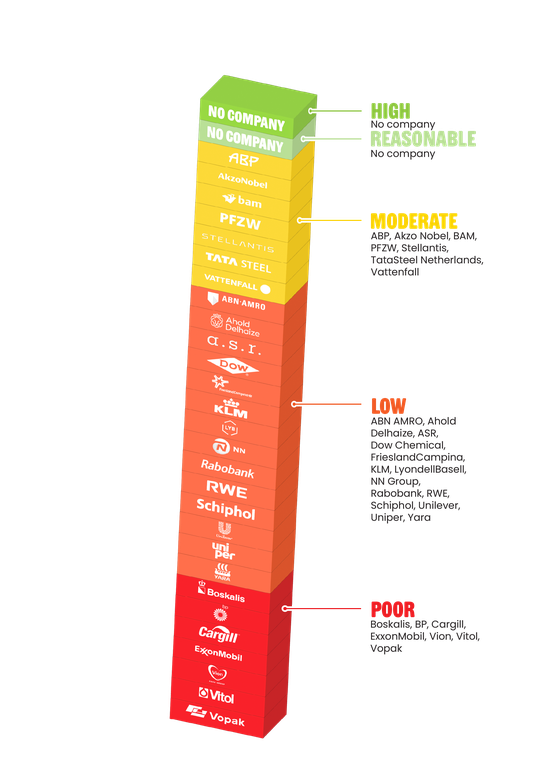
The results are shocking: large companies like ExxonMobil, BP and Vion seem to be neglecting the Paris Agreement goals in the face of a growing climate crisis. To meet the target of limiting global warming to 1.5 °C, climate plans must outline how companies will realise a minimum of 48% CO2 reduction by 2030. Although none of the 28 are meeting the required targets, some are at least taking steps in the right direction.
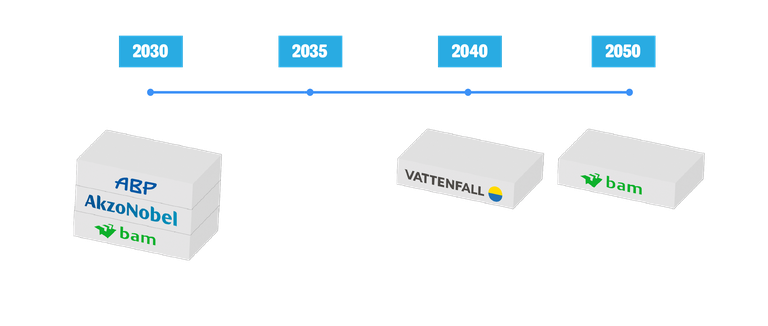
Companies are making promises of being climate-neutral by 2050, but they are not demonstrating how they aim to achieve that goal. Greenpeace’s recent Bonaire climate case made it clear that promises alone are not enough. Large polluters need to demonstrate exactly how they are going to achieve their goals, step by step, with concrete reduction targets for 2030, 2035 and 2040.
Out of the 28 companies, BAM, ABP and AkzoNobel were the only ones on track to reduce their emissions by 48% in 2030. Vattenfall stands out with its ambitious net zero by 2040 reduction goal.
All 28 companies
ABN AMRO • ABP • Ahold Delhaize • AkzoNobel • ASR • BAM Groep • Boskalis Westminster • BP • Cargill • Dow • ExxonMobil • FrieslandCampina • KLM • LyondellBasell • NN Group • PFZW • Rabobank • RWE • Schiphol • Stellantis • Tata Steel • Unilever • Uniper • Vattenfal • Vion • Vitol • Vopak • Yara
This new Climate Crisis Index is out on the day of the installation of the new Dutch government under Rob Jetten, and it has a clear message: this government needs to start taking action immediately. More specifically: they need to start working on climate policies with time-bound reduction targets. This can only work if they help companies that wish to make their policies greener, and stop any support for companies who fail to align their business with the goals from the Paris Agreement. We have a clear message to Jetten’s government: it’s time to act!
The NewClimate Institute has assessed these 28 companies’ strategies based on 4 key areas. The areas, listed below, all count towards the final score, but aren’t all weighed equally:
Our website uses cookies to ensure the use and functionality of this website. Read more about our cookie policy